OCD Awareness Week 11-17 October 2026
How often have you heard someone say,"I'm a little bit OCD"?
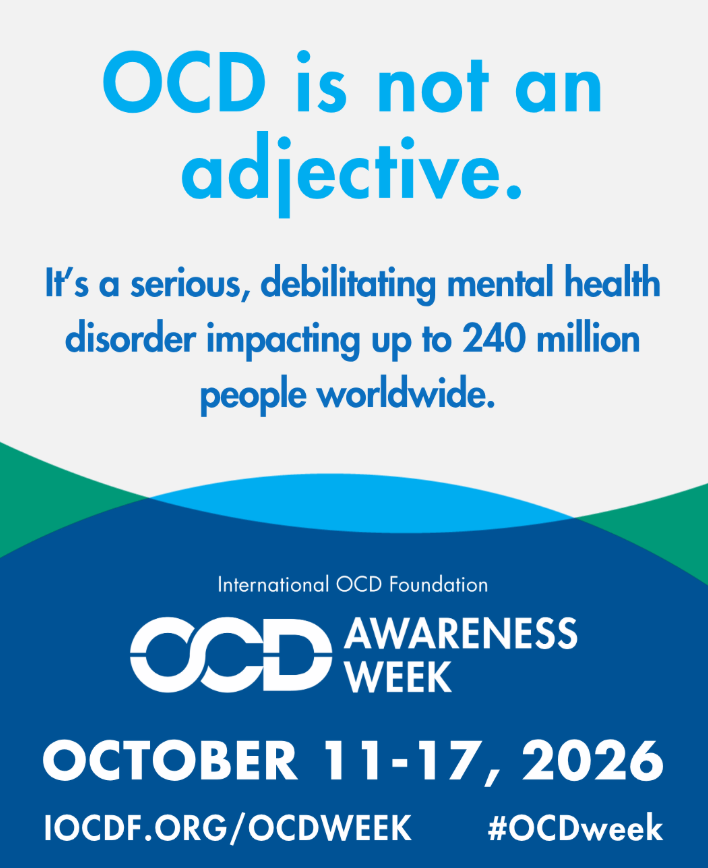
While these types of comments are often made casually, they can be deeply upsetting for people living with Obsessive-Compulsive Disorder (OCD). These stereotypes reduce a complex and often debilitating mental health condition to a personality trait or preference for neatness.
This OCD Awareness Week, let's challenge the myths and misconceptions surrounding OCD.
This year's campaign aims to increase understanding, reduce stigma, and encourage conversations about a condition that affects more than 200 million people worldwide. The International OCD Foundation's (IOCDF) awareness initiatives highlight the importance of recognising the many ways OCD can present and the barriers that misconceptions can create for those seeking support and treatment (International OCD Foundation, 2026).
OCD is far more than being tidy, organised, or liking things a certain way. It is a mental health condition characterised by unwanted, intrusive thoughts, images, or urges (obsessions) and repetitive behaviours or mental acts (compulsions) that people feel driven to perform to reduce distress. These experiences can be exhausting, time-consuming, and can have a significant impact on daily life (IOCDF, 2026).
By learning more about OCD and talking openly about mental health, we can help create a more informed and compassionate community. This OCD Awareness week, take the opportunity to listen, learn, and help spread awareness. You never know whose life a better understanding of OCD might impact. 💚
For more information, check out these resources:
Published on 12 Oct 2026
Orderdate: 12 Oct 2026
Expiry: 12 Oct 2028
related
Welcome back! And welcome to Mental Health Awareness Week.
Belonging is all about feeling connected. It is a fundamental part of our wellbeing and plays an important role in maintaining good mental health. Research show...
Beauty students assist with makeup for fundraiser
Fashion at the Grange is in its second year with the event selling out in record time. Funds raised will go to The Louise Davie Charitable Trust - for Pancreati...
OCD Awareness Week 11-17 October 2026
How often have you heard someone say,"I'm a little bit OCD"? While these types of comments are often made casually, they can be deeply upsetting for people...