Product Design grads innovate for outdoor sports
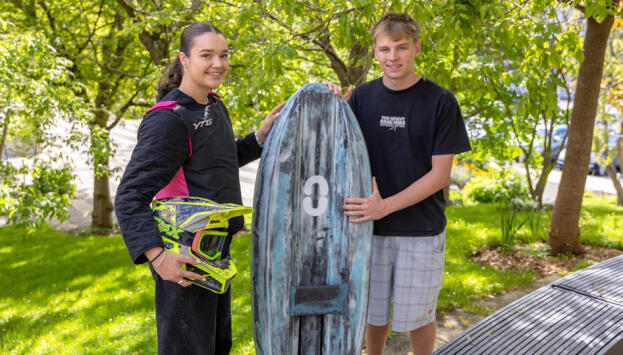
Two Bachelor of Product Design graduates have channelled lifelong outdoor passions into practical innovations aimed at making extreme sports more accessible and stable.
The creative product design projects by Anya Clark and Jack Callear grew from personal experience on cycle trails and in the water, and followed a hands-on process of building, testing, and refining.
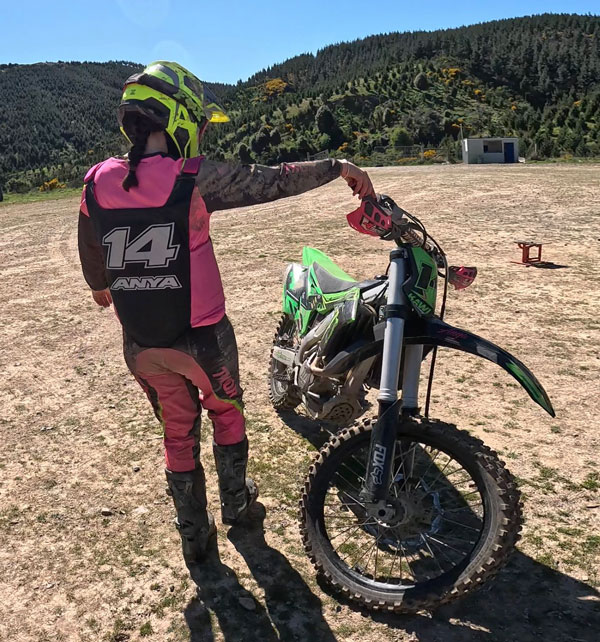
Anya has been riding bikes since she was four and competed regionally as a cross-country rider.
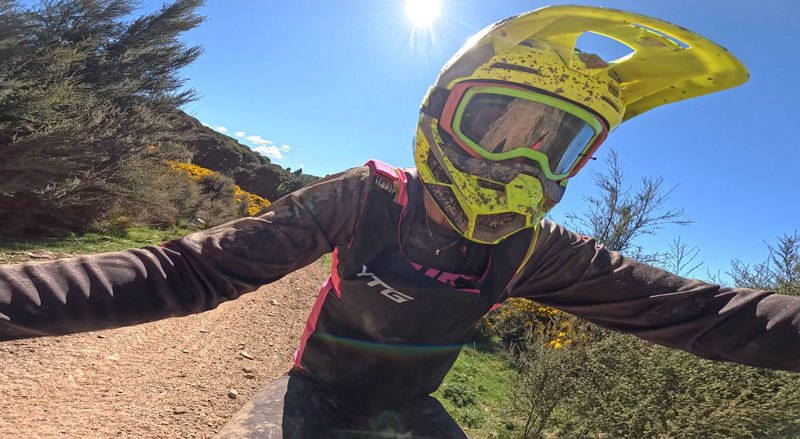
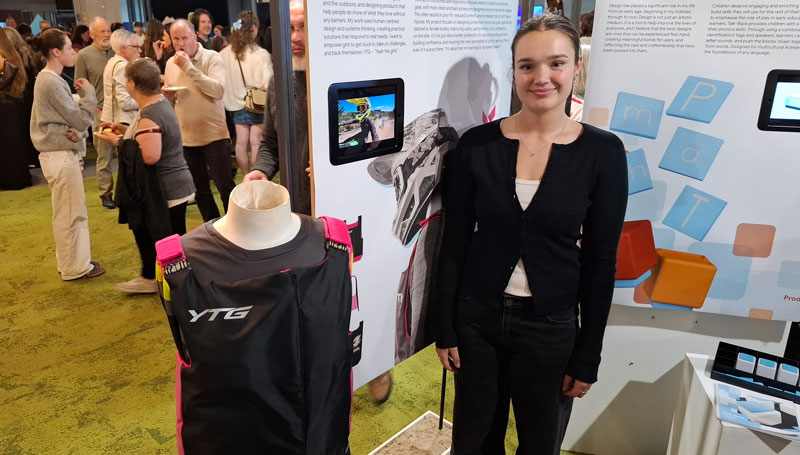
She decided to create an accessible women’s motocross protection vest – branded YTG (Yeah the Girls) – tailored for trail riding, cross country and motocross.
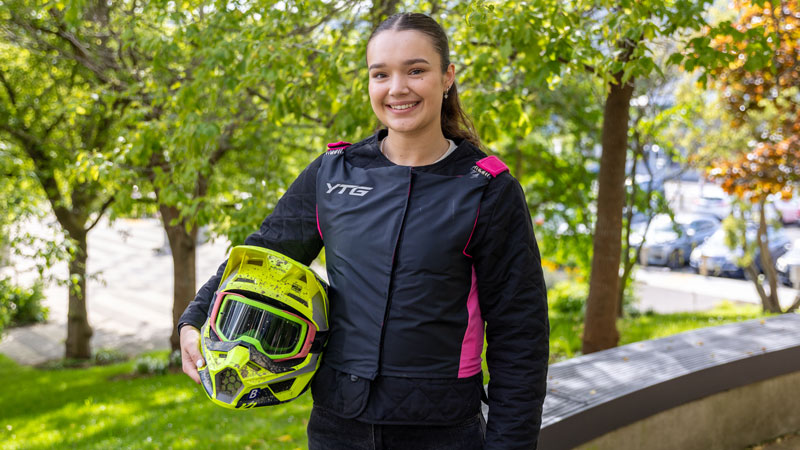
“At the moment we’re having to wear men's gear, because women's gear is very limited in this sport,” says Anya.
“But men's vests ride up and can be quite uncomfortable, so having something that’s ergonomically fitted for females was the goal.”
The idea crystallised at a motocross fun day where she was the only female rider.
“I was like, that’s already a problem in itself, the lack of participation.”
“And the fact there’s no gear, not much kit for women, probably doesn’t help make it a welcoming sport for girls.”

Anya taught herself much of the sewing and construction along the way, with guidance from her lecturers.
She’s keeping her options open for further work on the women’s vest, which would need to go through certification procedures to meet Motorcycling New Zealand rules.
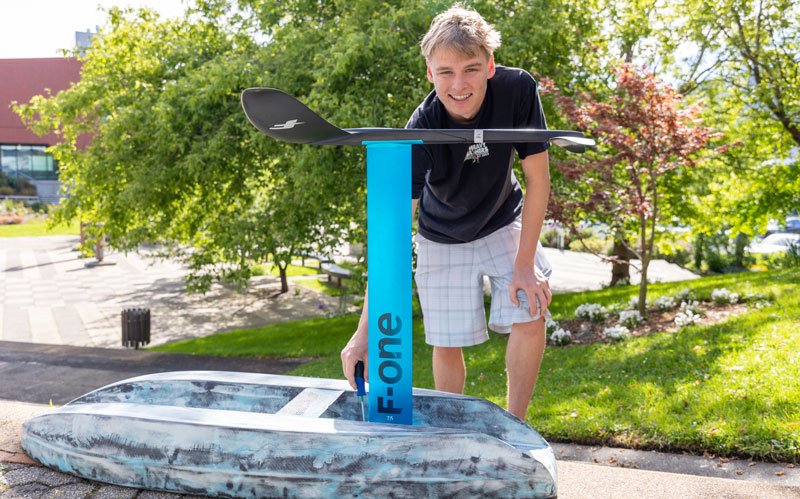
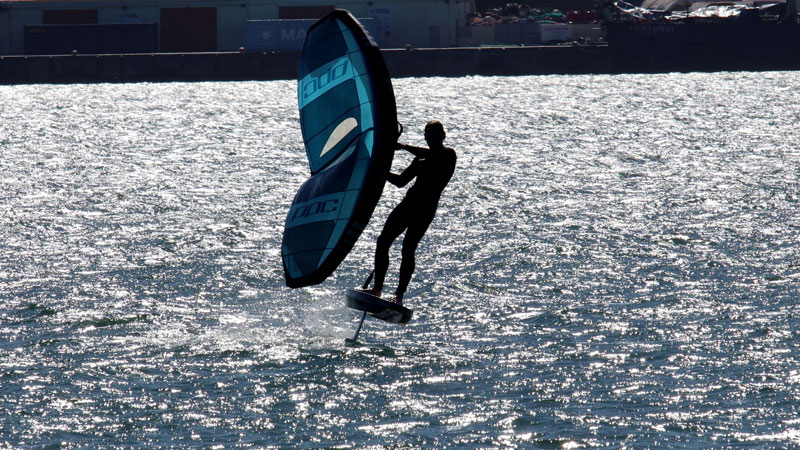
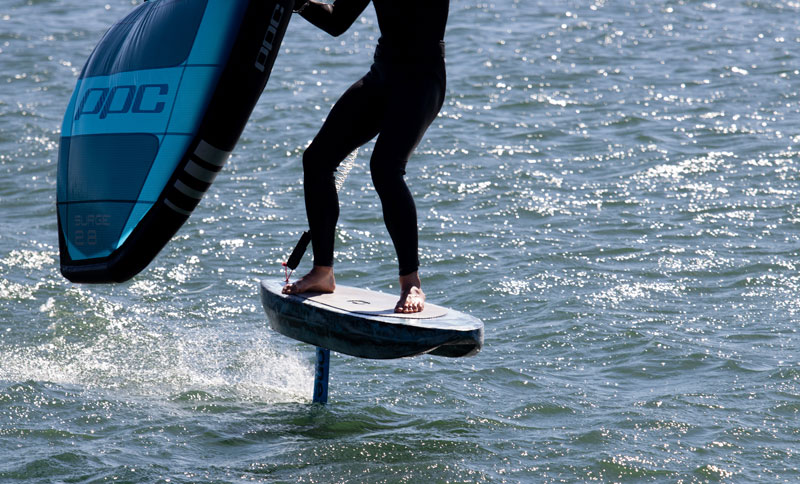
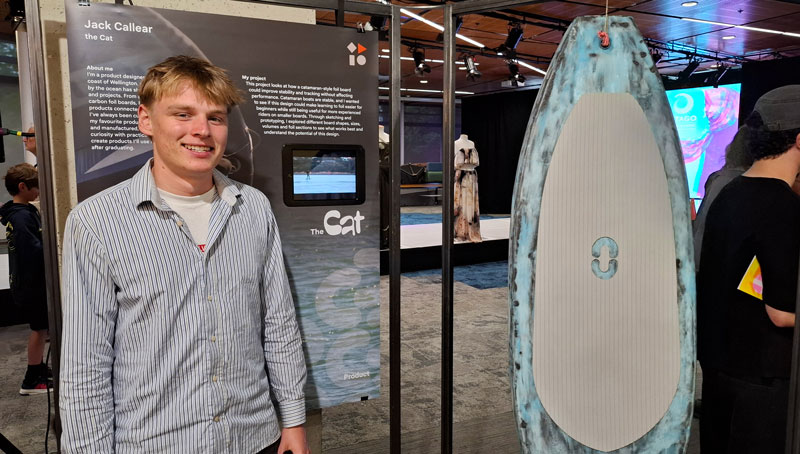
Meanwhile Jack has been hitting Otago Harbour to test out his project, a catamaran-style wing foil board called The Cat.
Two hulls run along each side to improve stability, while a central foil in the middle of the board provides lift. The board uses an EPS foam core wrapped in two layers of carbon fibre.
“It follows the catamaran-style hull design, with the aim of improving stability for riders on the water,” he says.
It’s been a passion project for Jack, who’s been a sailor for 10 years and a surfer and foiler for the last five.
He admits further tweaks and changes would be needed before taking any steps towards commercialisation, although is yet to decide on any future plans.
Senior lecturer Tim Armstrong is proud of both Bachelor of Design (Product) students, who he says stood out for their rigorous, real-world approaches.
“Both of these projects were self-driven, and they both followed a really solid hands-on iterative process of design and testing,” he says.
“Often students get a little bit comfortable in the studio but these guys did the opposite.”
“They made things early and went out and tested them and learned a lot from that process, making refinements and finding innovative solutions at every step.”
Tim also believes they’re examples of products which wouldn’t have seen the light of day in a world where design was governed by AI.
“AI couldn’t have identified the problems these products have tried to solve,” he says.
“And it also would also have failed in the physical testing and refinement process.”
As the students prepare to graduate, Jack is already in conversation with an Auckland wing-and-foil company interested in his broader design skills, including earlier polytech sewing projects.
Anya meanwhile is considering options that could keep her close to motocross, possibly within the graphics area designing motorbike decals.
The two product design graduates are showcasing their creations as part of the School of Design's Debrief exhibition.
Published on 20 Nov 2026
Orderdate: 20 Nov 2026
Expiry: 20 Nov 2028
related
Product Design grads innovate for outdoor sports
Two Bachelor of Product Design graduates have channelled lifelong outdoor passions into practical innovations aimed at making extreme sports more accessible and...
Communities welcome Occupational Therapy projects
Running a “Pop-up Parlour” for elderly residents at Queen Rose Retirement Home in St Kilda proved a big but rewarding challenge for 5 third year Occupationa...